2 hours
Sunset walk
Local Aboriginal guide
- StartsWave Rock Car Park
- StoriesKatter Kich
- SeeHand stencils
Spot your stop
Brief answer
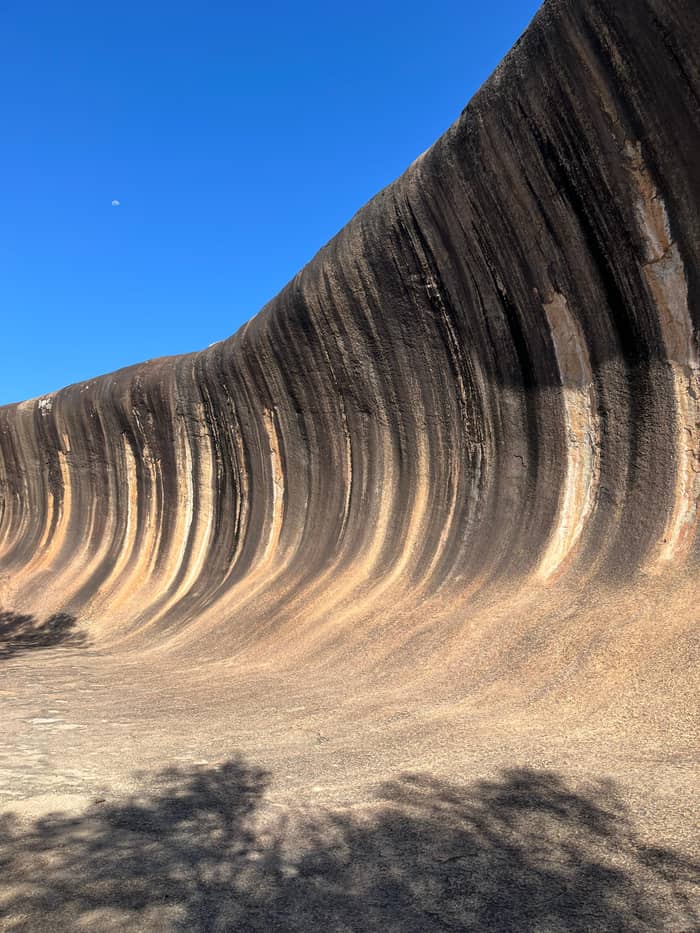
Wave Rock, known as Katter Kich, is a Noongar meeting place, and Mulka's Cave nearby holds hand stencils ranked among the most important Aboriginal rock art in Western Australia.
Worth knowing
Check out 20 stops
Pick a route, then tap a marker or a stop for notes and a Google Maps link.
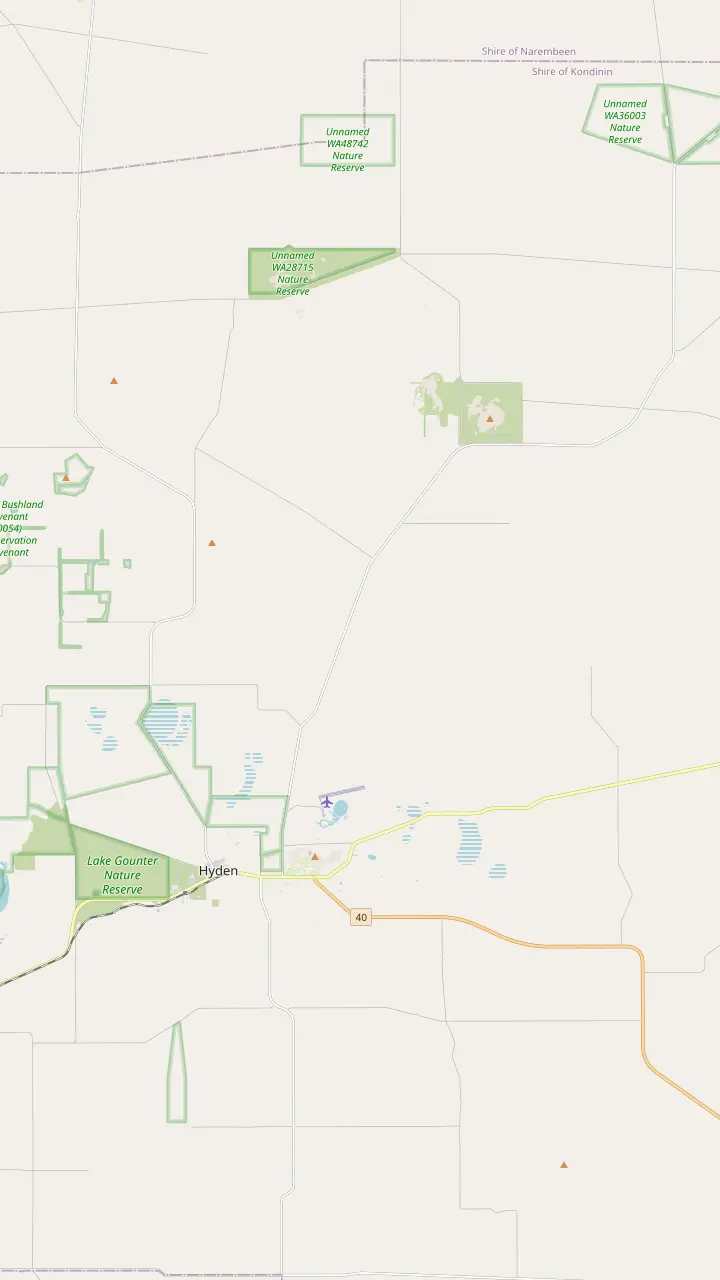
Hyden is home to roughly 437 people and lies 340km east of Perth by the Brookton Highway.
Google MapsThe Shire puts the rock 5km east of Hyden, and from the car park the wave is a 100m stroll.
Google MapsA granite outcrop approximately 16 km north of Wave Rock; the Kalari Trail climbs to its summit over 1,670 metres.
Google MapsHand prints make up 69% of the 452 motifs recorded on the cave walls.
Google Maps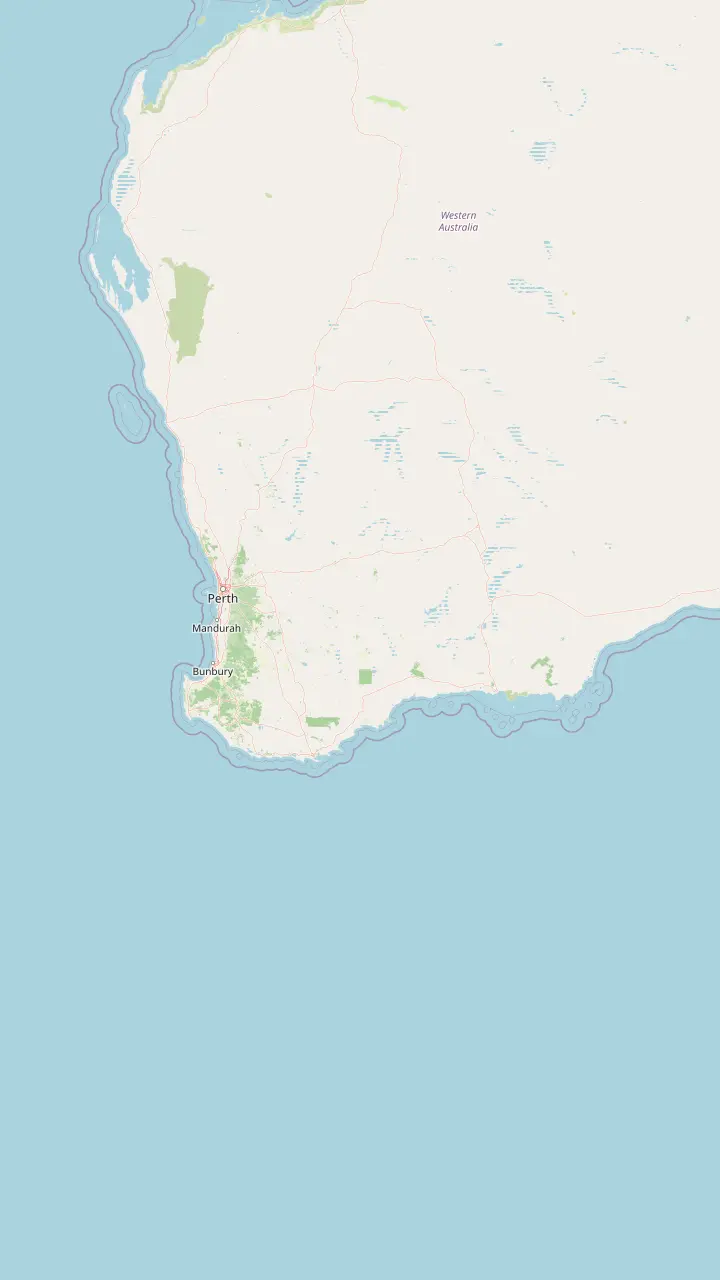
The Shire of Kondinin counts 334 km by road from Perth to Hyden.
Google MapsBy the Shire's table, Albany to Hyden is 339 km.
Google MapsEsperance to Hyden is 382 km, and a signed self-drive links the coast with the rock.
Google MapsBy the Shire's table, Kalgoorlie to Hyden is 488 km.
Google MapsThe Granite Woodlands Discovery Trail joins Hyden to Norseman, with 16 designated stops.
Google MapsThe 4WD-only Holland Track runs about 350km between Hyden and Coolgardie.
Google MapsThe Shire puts the rock 5km east of Hyden, and from the car park the wave is a 100m stroll.
Google Maps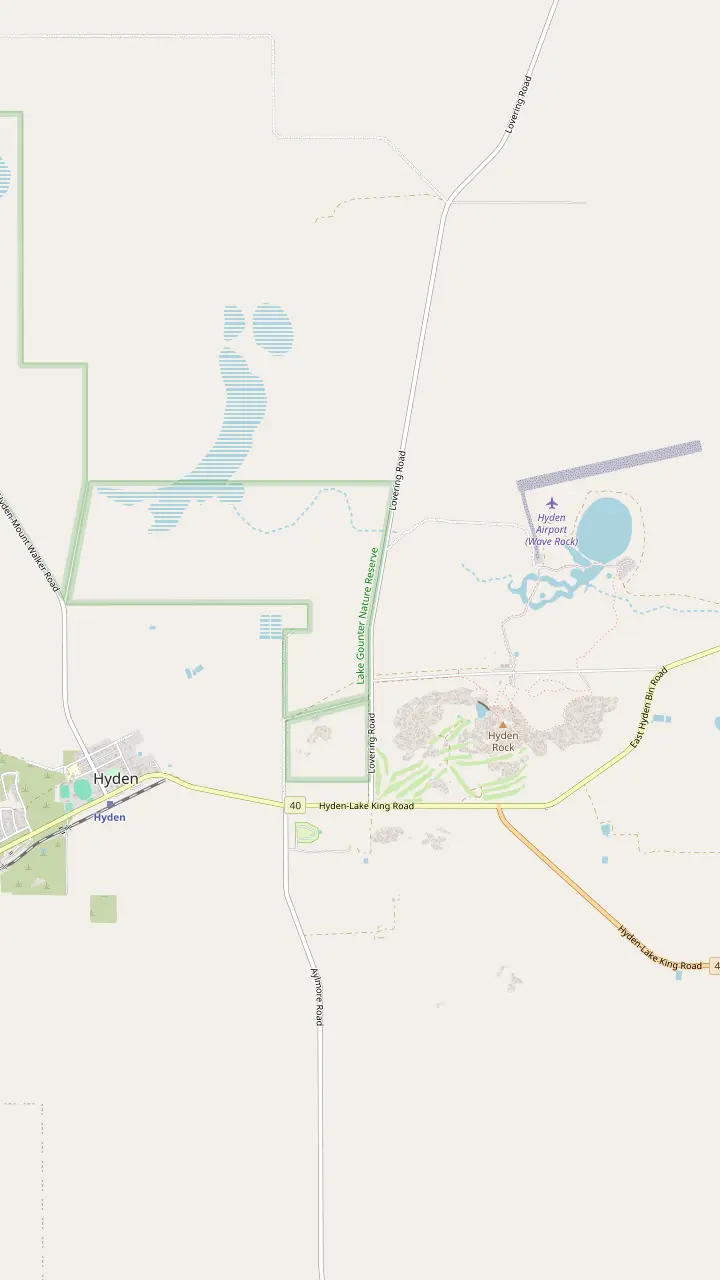
Hyden is home to roughly 437 people and lies 340km east of Perth by the Brookton Highway.
Google MapsThe Shire puts the rock 5km east of Hyden, and from the car park the wave is a 100m stroll.
Google MapsA granite tor that once belonged to the main outcrop, on a loop track of approx 1 km from the car park.
Google MapsA clear, salty lake on a gypsum bed, one km north of Wave Rock by Wave Rock Management's figure.
Google MapsFlights from Jandakot take one hour, then it is a five-minute drive into Hyden.
Google Maps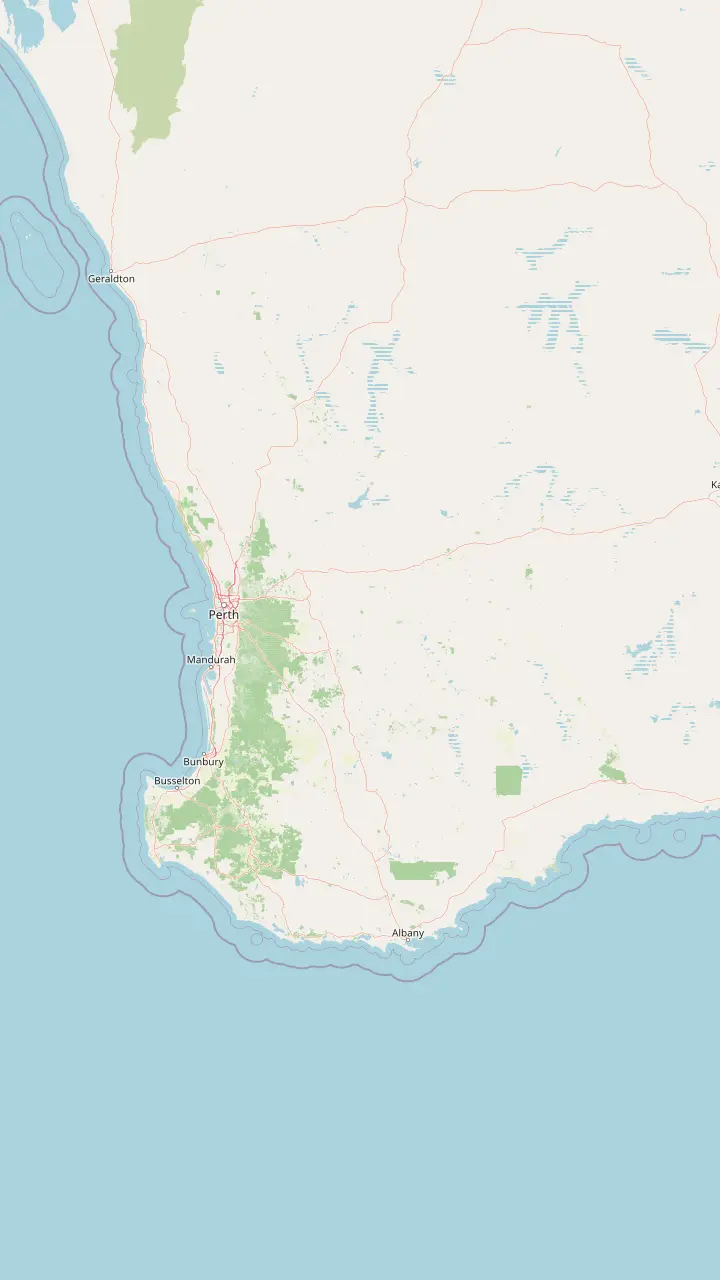
The Shire of Kondinin counts 334 km by road from Perth to Hyden.
Google MapsThe oldest inland town in Western Australia, about 97 kilometres by road east of Perth.
Google MapsA heritage Wheatbelt town on the banks of the Avon River.
Google MapsThe southern way out of Perth follows the Albany Highway through Brookton, about 3 1/4 hours to Hyden.
Google MapsCalled a Town of Windmills: nearly every house had one until 1960, when scheme water came.
Google MapsBegun in 1974 when Paddy Wright buried his dog Strike; over 200 dogs now rest here.
Google MapsA town of 354 people; Statue Lake sits 10km west on the Corrigin-Kondinin Road.
Google MapsReached 27km south of Kondinin, it is home of the Tin Horse Highway.
Google MapsHyden is home to roughly 437 people and lies 340km east of Perth by the Brookton Highway.
Google MapsMaps © OpenStreetMap contributors
Long before coaches came from Perth, the granite around Hyden was a meeting place, a water source and a canvas. This guide explains why Wave Rock is important to Indigenous Australians, and how to visit Mulka's Cave with care.
Editorial team, waverocktour.com · Updated November 8, 2026 · ~8 min read
Main facts
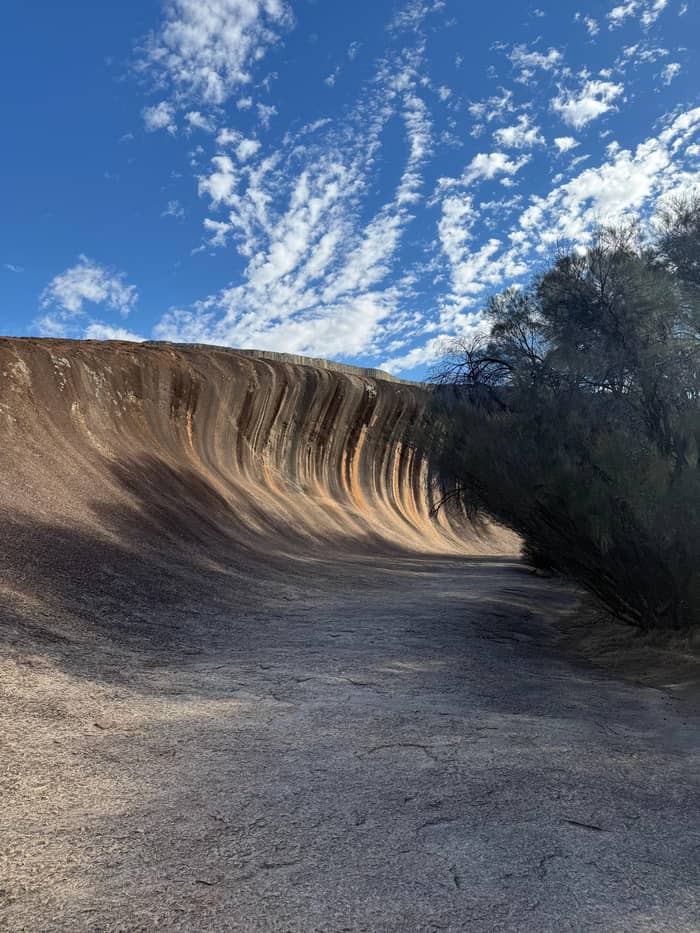
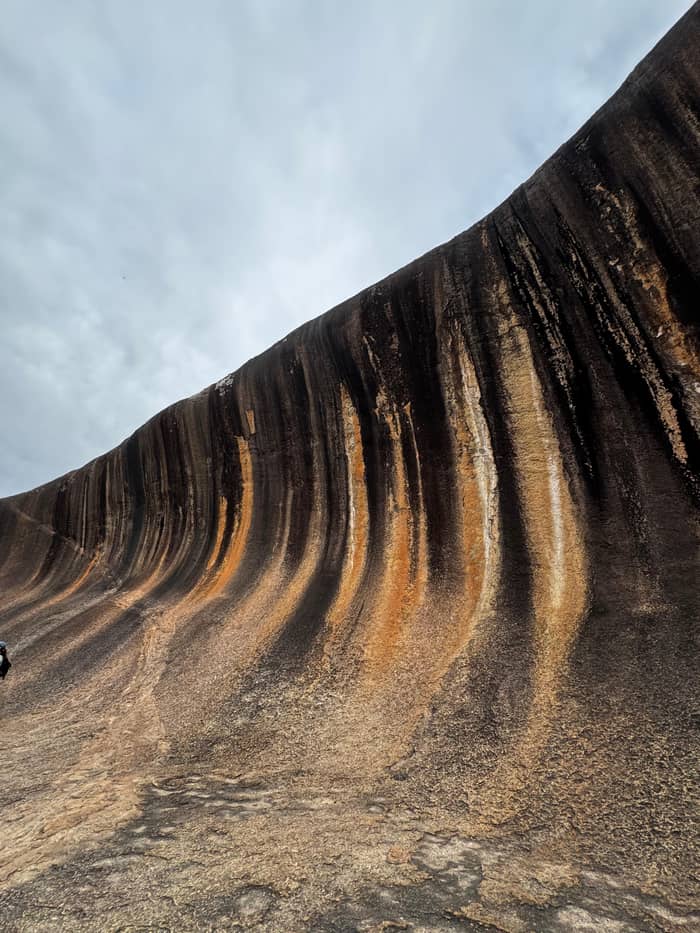
To understand why Wave Rock is important to Indigenous Australians, start with the land it stands on. Australia's Golden Outback names the rock Wave Rock / Katter Kich and records it as a place where Noongar people met, with strong cultural links.1 That double name is the plainest answer to anyone asking about Wave Rock's Indigenous name, and it is worth using when you talk about the place.
The Shire of Kondinin's trail brochure is just as direct about the time scale: Noongar people have lived on this land for tens of thousands of years.5 Put simply, the official sources describe this as Noongar country, and that is the right way to think of it from the moment you leave the highway. The farming history that the town signs celebrate, with its first recorded farming in 1922, is a very recent chapter laid over a far older one.6
The granite itself explains much of the attraction. In dry country, bare rock gathers rain and holds it in hollows, and big outcrops like Hyden Rock and the Humps were landmarks visible from far across the plain. Wave Rock Management writes of signs that Aboriginal families lived around here, and of hands painted on the granite at the Humps that can still be seen.7 Water, shelter and stone made these rocks places to return to.
Mulka's Cave at a glance
| Topic | Detail | Source |
|---|---|---|
| Distance | approximately 16 km north | Shire brochure2 |
| Last turn | Bates Road, then 1.5 km | Shire brochure15 |
| Art | 452 motifs, 69% hands | Shire brochure3 |
| Dated use | about 400 years old | Wave Rock Management9 |
| Status | Protected Area | Wave Rock Management4 |
| Facilities | Toilets, bins | Wave Rock Management16 |
Details as the Shire of Kondinin's brochure and Wave Rock Management give them.2,9,4
The cave near Wave Rock that draws people north is Mulka's Cave, at a second granite outcrop called the Humps. The Shire's brochure puts the Humps approximately 16 km north of Wave Rock, while Australia's Golden Outback places the cave 18 kilometres north, off Lovering Road.2,12 Wave Rock Management describes it as a 15 minute drive.13 The road is sealed for most of the way, so an ordinary car can make the trip.14
The brochure's directions are simple. Drive 1 km west from Wave Rock as if heading back to Hyden, turn right at the T-junction onto Lovering Road, turn left onto Bates Road 16 km later, then follow it for 1.5 km and turn left into the reserve.15 There are public toilets and rubbish bins in the Humps car park.16 Wave Rock Management lists Mulka's Cave as included in the Wave Rock entry pass, so keep your ticket from the main car park.17
Allow time for more than the cave. The Humps have their own walking trails, and the brochure counts the cave's art among the state's most important Aboriginal rock paintings.2 Wave Rock Management's travel advice applies here as much as anywhere: a wide-brimmed hat, long sleeves, sunscreen and plenty of water.18 The outcrop is exposed and the bush around it is quiet, with very little shade on the bare granite.
Step inside and let your eyes adjust to the dim light before you look closely at the walls. The Shire's brochure counts 452 Aboriginal motifs in Mulka's Cave and says hand prints make up 69% of them, with left hands outnumbering right hands 3 to 2.3 The same brochure describes over 450 separate hand prints and images across the walls of the two main chambers.23 The figures vary with what is counted, which the chart on this page sets out.
Wave Rock Management describes the dominant art as hand stencils, with over 140 examples representing both adults and children.20 The method is simple and moving: a hand was placed on the rock and pigment was blown over it, so that when the hand was lifted a negative outline remained.24 Seeing a child's small hand next to an adult's turns abstract history into something very personal.
Hand stencils were made for many reasons, but Wave Rock Management says they were most commonly a form of signature left by those with rights to the area.25 There are also line paintings, drawn with a finger or with a twig dipped in ground ochre and water.26 Keep your own hands off the walls: skin oils and dust do damage that cannot be undone.
Choose your way in
Pick the depth that suits your time and your interest.
If I want to hear it from an Aboriginal guide
Join the sunset walk
A local Aboriginal guide leads it from the Wave Rock Car Park.
If I have a car and an hour
Walk the Gnamma Trail
1,220 metres with ten panels in Noongar voices.21
If I am coming from Perth
Take the day tour
It visits Mulka's Cave and tells the legend there.
If I want to see the art itself
Go inside Mulka's Cave
452 motifs, most of them hand prints.3
If I want bush food stories
Ask about Indigenous tours
Stories and bush tucker with an experienced guide.22
Ways to learn more
2 hours
Local Aboriginal guide
Full day
York, the wave, the cave
On foot
Self-guided at the Humps
Dating rock art is hard, and the official sources are careful about it. Wave Rock Management notes that Aboriginal culture is shown by research to stretch back at least 40,000 years.8 Yet digs in the cave floor point to fairly recent use of this particular site: stone tools and bones turned up beside old camp fires dated to about 400 years old.9 Both figures are true at once, and they describe different things.
The cave also carries a later layer of meaning. Wave Rock Management writes that the tribal elders are thought to have declared the area taboo country in the 1700s because of Mulka's spirit.10 That is a reminder that a place can be important precisely because people kept away from it. The legend and the prohibition belong together, and both are part of the district's history, long before the cave became a protected site.
Because of all this, the site is legally protected. The Aboriginal Heritage Act protects Aboriginal sites, and the most significant of them can be declared Protected Areas.54 Wave Rock Management adds that rock art sites are very rare in the south-west of the state, and that Mulka's Cave is both a Protected Area and listed on the Register of the National Estate.4 Treat a visit as you would a visit to any important heritage place.
Layers of time
Deep past
Noongar people here for tens of thousands of years.5
Culture
Aboriginal culture at least 40,000 years old.8
At the cave
Camp fires dated to about 400 years old.9
The 1700s
Elders thought to have declared it taboo.10
The 1920s
Hyden named after a sandalwood cutter.11
Today
Protected Area and Register of the National Estate.4
The name of the cave comes from an Aboriginal legend associated with it.55 The version below is the one the Shire of Kondinin publishes for visitors; deeper meanings belong to the cultural custodians and are theirs to share. In that public telling, Mulka was born of a love that broke the law: his mother fell for a man she was forbidden to marry under their law.56 What follows is a short retelling, not a quotation.
As the story goes, the boy was born with crossed eyes. He grew into a man of great strength and size, but his eyes stopped him aiming a spear well, and he could not become a successful hunter.57 Frustration turned him to terrible acts, and the whole district came to fear him. He lived in the cave, and the published legend says his handprints can still be seen there, larger and higher than those of an ordinary man.58
Look up at the highest stencils in the cave and you may find yourself connecting them with the story, which is what the legend invites. Hear it as a story about law and its consequences, told on country, rather than as a ghost tale. The day tour this site books includes Mulka's Cave and the Aboriginal legend of Mulka in its day, and a local Aboriginal guide leads a separate sunset walk at Wave Rock that shares Dreaming stories of Katter Kich.
Video
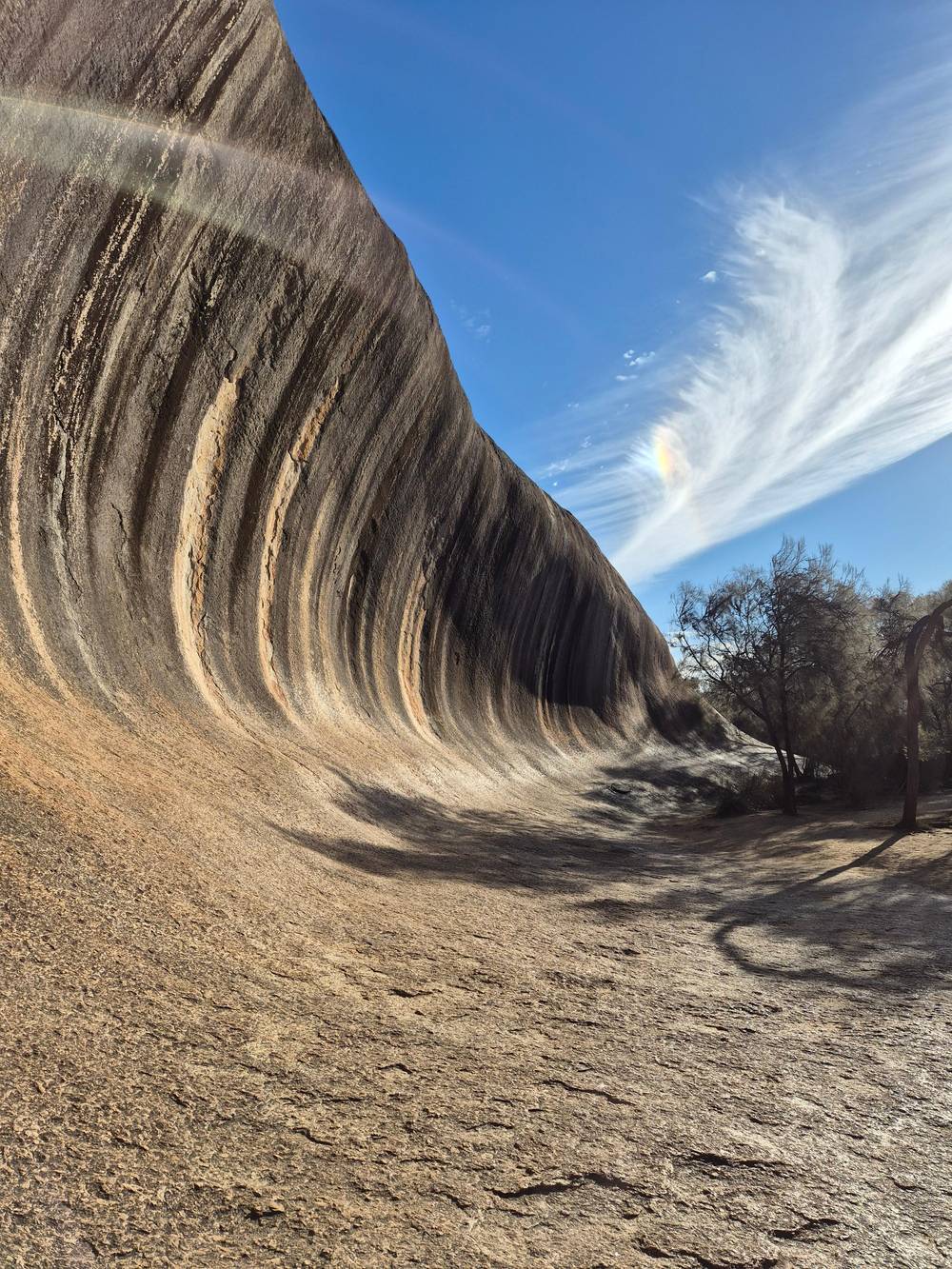
Han Travels Slow on YouTube · The video waits until you tap play to load.
Rock Art sites are very rare in the southwest of WA, Mulka’s Cave is both a Protected Area and is listed on the Register of the National Estate
Visiting with care
At the Humps, the Gnamma Trail is the best introduction to how people lived here. It runs 1,220 metres, with ten interpretive panels drawn and worded by local Noongar elders and artists.21 Along it are rock holes, or gnamma, and a lizard trap that Noongar people are thought to have used for centuries.59 The second trail, the Kalari, takes its name from the Noongar word for the small lizards that live on the rock.60
Gnamma holes were vital in this dry country. Wave Rock Management describes them as natural cavities in hard rock, especially granite, acting as water tanks refilled by rain runoff.61 People laid sticks, leaves and flat rocks across the narrow openings to keep animals out and slow evaporation.62 When you see a hollow full of rainwater on the granite, you are looking at a resource that once decided where families could travel and camp.
Plants and birds carried meaning too. Sheoaks grow both at the foot of Wave Rock and by the back exit of Mulka's Cave, and their wood was often shaped into shields and utensils.63 The red-capped robin appears in Aboriginal stories and was called Pinny Pinch or Cubbie, meaning friend.64 The quandong was an important food, valued as a substitute for meat.65 Look out for each of them as you walk, and the bush around the Humps starts to read like a pantry and a toolshed.
A few simple habits make a visit respectful. Stay on the marked trails, keep children close in the cave, and never touch the art. Wave Rock Management asks walkers not to remove plants, rocks or Aboriginal artefacts or disturb wildlife.52 If you notice a flaked stone or anything that looks worked by hand, leave it exactly where it lies and enjoy it there. The law protects these places, and so do good manners.
A good way to understand the place is to hear it from people connected to it. Wave Rock Management offers Aboriginal stories and bush tucker with an experienced guide.22 A 2-hour sunset walk at Wave Rock is led by a local Aboriginal guide, starting at the Wave Rock Car Park, with stencilled hands beneath an overhang and Dreaming stories of Katter Kich along the way, from $77. Book ahead, as it runs from Hyden rather than from Perth.
If you are coming from Perth for the day, the site tour covers York, Wave Rock and Mulka's Cave in 12.5 hours, with the legend of Mulka told at the cave, from $188. Whichever way you come, give the cave time and quiet. Sit for a moment in the cool chamber, count the small hands among the large ones, and the reason this granite matters becomes clear without anyone needing to explain it.
FAQ
Katter Kich, used alongside Wave Rock by Australia's Golden Outback.1
Noongar people have lived here for tens of thousands of years.5
The Shire's brochure counts 452 motifs, 69% of them hand prints.3
It is a Protected Area and listed on the Register of the National Estate.4
Camp fires on the cave floor date to about 400 years old.9
Wave Rock Management lists it as included in the Wave Rock entry pass.17
Sources
Planning the long day out to Wave Rock? A real person answers here.